+86-18957717686


Picking out the best illuminated Push Button supplier in China isn’t just about looking at prices in the catalog — there’s more to it. According to reports from Grand View Research and MarketsandMarkets, demand for reliable human-machine interfaces keeps climbing, especially in factory automation, control panels, and equipment upgrades. So yeah, these trends open up some great opportunities, but they also mean you’ve got to be careful and watch out for potential risks. Just because a button has a bright ring around it, doesn’t mean it’s guaranteed to switch safely or reliably.
A good supplier should back their products with solid technical proof. Don’t just take their word for it — check out contact ratings, electrical and mechanical lifespan, ingress protection ratings, operating temperatures, and mounting sizes. It’s also a smart move to ask for test reports that show compliance with standards like IEC 60947-5-1, RoHS, CE, or UL. The right illuminated push button should stay easy to read even in harsh lighting, and it should work smoothly whether you’re wearing gloves or not. Little things matter — like how firm the actuator feels, whether the LED brightness stays stable, and that the terminals are sealed tightly.
You can really see how experienced a supplier is when you get samples. Do they clearly explain any tolerances or variations? Are they able to provide traceable materials, detailed inspection records, and support if anything needs to be replaced? Big brands like Bulgin, Schneider Electric, and Eaton set some solid standards in documentation and product quality, which can serve as good benchmarks. Chinese manufacturers often offer great customization options, quick tooling, and faster communication — but keep in mind, quality can vary a lot from one factory to another.
Remember, a low price doesn’t automatically mean good quality, so don’t just rely on that. It’s smart to test out samples in real-world conditions — do repeated presses, check for vibration resistance, exposure to moisture, and how well the color stays visible. Review the supplier’s history — how quickly they respond, how thorough their audits are, and so on. Still, even thorough testing can’t catch everything — some issues only show up after actual use in the field. So, the best decision usually comes down to balancing certification, experience, the ability to customize, and reliable after-sales support.
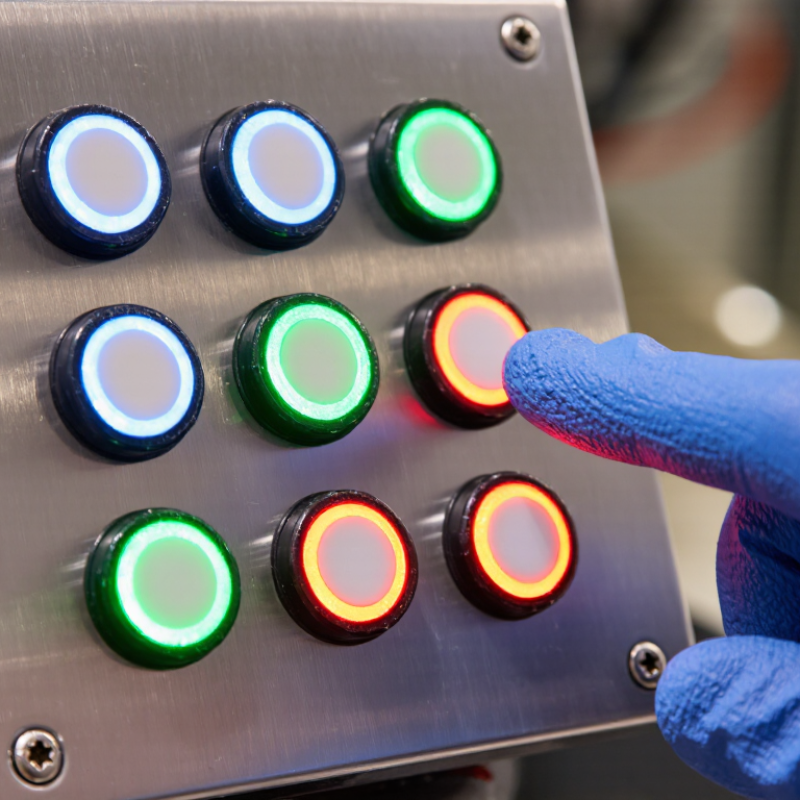
An illuminated push button is a control switch with a built-in light source. The lamp shines through or around the button cap. It shows whether a circuit is ready, active, selected, or requiring attention. Unlike an ordinary push button, it provides both physical and visual feedback.
The light may use an LED because it offers low energy use and long service life. However, brightness alone is not enough. The button must match the control voltage, switching current, panel thickness, and operating environment. In practical control panels, a clear symbol and steady illumination can prevent hurried mistakes. Color also matters. Red may indicate danger, while green often suggests an available function. These meanings should remain consistent across the system.
A careful buyer should inspect contact quality, sealing, mechanical life, and wiring instructions. A supplier should provide accurate drawings, test information, and responsive technical support. Small details matter. A loose terminal can weaken an otherwise excellent panel. It is also easy to assume that a brighter button is better. Sometimes it causes glare, especially in a dark cabinet. Good selection requires testing the actual button under real lighting and operating conditions. Even experienced engineers can overlook user visibility. That deserves a second review.
China Best Illuminated Push Button Supplier?
Key Features of Illuminated Push Buttons
An Illuminated Push Button Switch combines visual feedback with direct mechanical control. Its light ring or central lens shows power, alarm, or operating status. During factory testing, technicians can identify a lit green button from several meters away. That small detail reduces hesitation near crowded control panels.
Brightness consistency matters. Uneven LEDs may create confusing dark spots, especially under strong warehouse lighting. Buyers should check rated voltage, current consumption, viewing angle, and expected service life. According to MarketsandMarkets’ 2024 industrial automation report, the industrial automation market is projected to reach over USD 265 billion by 2029. More automated equipment means more demand for clear, reliable operator interfaces. Still, market growth does not guarantee good switch design.
Protection ratings need careful attention. IEC 60529 classifies enclosure protection, while IP65 can resist dust and low-pressure water jets. It does not permit immersion. I have seen purchasing teams select IP ratings without checking cable entry points. That mistake weakens the whole panel. Mechanical life, contact arrangement, LED color stability, and tactile force also deserve testing. Short travel feels modern. It can also cause accidental activation. A practical evaluation should include gloved operation, nighttime visibility, vibration exposure, and repeated switching cycles. Keep the evidence measurable.
Evaluating a Chinese illuminated push button supplier requires more than comparing catalog prices. Ask for production photos, material specifications, and recent test records. A reliable factory should explain contact ratings, LED voltage options, ingress protection, and expected service life. I also request a sample from the same production line, not a specially prepared showroom unit. Small details matter. Check the button’s return feel, terminal finish, light uniformity, and label clarity.
Supplier experience becomes clearer during technical discussions. Can the engineer recommend a suitable switching current, or only repeat catalog data? Ask how the supplier controls soldering, assembly torque, and final inspection. Request a documented sampling plan and traceable batch numbers. Confirm whether custom symbols, wire lengths, and mounting dimensions are controlled drawings. Vague answers deserve caution. A low quotation may exclude tooling, packaging, inspection, or replacement parts.
Visit the facility when practical, or arrange a live video inspection. Observe storage conditions, calibration labels, and how rejected units are separated. Verify certificates directly and check whether their scope matches the actual product. Before placing a large order, run humidity, vibration, repeated-press, and temperature tests suited to your application. My own evaluation process is not perfect; short samples can hide long-term contact wear. I would record failures openly and revise the supplier score instead of protecting an early decision.
China Best Illuminated Push Button Supplier?
Choosing the right supplier requires more than comparing unit prices. Start with product fit. Check contact ratings, LED voltage, switch life, and panel-cutout dimensions. An Illuminated Double-Headed Push Button should provide clear status visibility in busy control panels. Ask for material details, including housing plastics, terminal metals, and sealing methods. A practical supplier should explain these choices without vague promises.
Request samples before placing a large order. Test button feel, light uniformity, terminal strength, and performance after repeated operation. Review inspection records, traceability procedures, and available compliance documents. Production capacity matters, but consistency matters more. Confirm tooling ownership, minimum order quantities, packaging protection, and replacement handling. My experience is that fast replies do not always mean strong engineering support. That assumption needs checking.
Tips: Compare three suppliers using the same checklist. Ask for a sample report, not only photographs. Confirm whether testing covers the exact model and voltage. Discuss lead times in writing, including sample approval and peak-season delays. A supplier that admits limitations may be more reliable than one promising everything. Also inspect communication details. Can the technical team understand a wiring diagram? Can they explain a failed sample clearly? Small gaps often become expensive delays. Supplier comparison should remain evidence-based, even when a low quotation looks attractive.
Reference weighting based on common industrial procurement priorities: compliance and safety, reliability, environmental protection, customization, delivery capability, and total cost.
Choosing the best illuminated push button supplier in China requires more than comparing unit prices. Quality begins with controlled materials, stable assembly, and repeatable testing. In factory evaluations, I look for documented incoming inspection, contact resistance checks, LED brightness testing, and switch-life tests. A button should feel consistent, not loose or gritty.
Certifications must match the product and destination market. ISO 9001 indicates a quality management system, but it does not guarantee every shipment is perfect. CE, RoHS, UL, or other approvals should include valid product scopes and traceable test reports. Ask for certificate numbers, issuing laboratories, and renewal dates. Be careful here. A copied certificate can look convincing.
Manufacturing discipline is visible in small details. Operators should use calibrated torque tools, while production records should connect each batch to raw materials and inspectors. Sampling plans, final visual checks, and waterproof testing matter for industrial panels exposed to dust or moisture. During an audit, examine rejected parts, not only polished samples. That is where reliability becomes measurable. Some suppliers may pass initial inspections yet struggle with color consistency or long-term button rebound. A practical supplier should admit these risks, explain corrective actions, and provide a clear pre-shipment inspection process. Perfect claims deserve questions.
When buyers search for the best China Illuminated Push Switch supplier, customization often shapes the final decision. An Illuminated Push Switch can use LED colors, engraved symbols, metal or nylon bezels, and different terminal layouts. Provide a drawing, voltage range, panel thickness, and expected operating cycles. Clear details reduce revisions. Suppliers should confirm IP rating, contact material, illumination uniformity, and test methods before quoting. Ask for a sample.
Pricing depends on more than the unit figure. Tooling, mold changes, LED type, cable length, packaging, and inspection requirements can alter the offer. A metal housing with a 24-volt ring light may cost more than a standard plastic body. Request a line-by-line quotation. Compare sample charges, tooling ownership, shipping terms, and warranty coverage. Some quotes exclude testing or export packaging, which can distort planning. A low quote can look attractive, but hidden costs may appear later.
Minimum order requirements vary by structure and customization level. Standard switches may accept a few hundred pieces, while custom engraving or tooling may require 1,000 units or more. Ask whether the MOQ applies per color, voltage, or combined order. A mixed batch may be possible. Before approving mass production, inspect samples under real panel conditions. Check button travel, LED brightness, terminal fit, and heat after continuous operation. One weak detail can become an expensive field problem. Suppliers with traceable inspection records and responsive engineering support are usually safer choices, even when their price is not the lowest.
Choosing the best Illuminated Button Switch starts with the application, not the catalog price. A control panel near coolant needs different protection from a dry laboratory console. The 2024 Industrial Automation Market report projects global growth from about USD 205 billion in 2024 to over USD 265 billion by 2029. That expansion increases supplier choices, but also increases quality risks.
Ask for measured data, not attractive photographs. Check contact rating, switching life, LED voltage, operating temperature, and terminal construction. For dusty or wet equipment, compare the stated enclosure rating with IEC 60529 testing requirements. A supplier should provide inspection records, material certificates, and samples from the same production line. Small details matter. A loose bezel can fail during vibration.
Installation experience often reveals more than a datasheet. Test the Illuminated Button Switch with your actual load, wiring length, gloves, and panel thickness. Confirm the light remains visible under factory lighting. The 2023 Global Electrical Equipment Market analysis reported that reliability and maintenance costs strongly influence industrial purchasing decisions, not only initial price. Still, published market figures can vary by research method, so do not treat every forecast as fact. I would also question unusually long lifetime claims without test conditions. A supplier that accepts a pilot order and documents corrective actions usually offers stronger evidence than one promising perfection.
| Evaluation Dimension | Recommended Benchmark | Why It Matters | Supplier Verification Method |
|---|---|---|---|
| Application Environment | Indoor, outdoor, industrial, medical, transportation, or food-processing use should be defined before selection. | Dust, moisture, chemicals, vibration, and temperature can significantly affect switch reliability. | Provide the supplier with the operating environment, enclosure design, cleaning method, and installation location. |
| Mounting Diameter | Common panel cutout sizes include approximately 16 mm, 19 mm, and 22 mm. | The mounting size must match the existing panel or mechanical drawing. | Request a dimensional drawing showing cutout diameter, body depth, terminal position, and mounting hardware. |
| Ingress Protection | IP54 for protected indoor applications; IP65 for dust-tight protection and water jets; IP67 for temporary immersion requirements. | A higher IP rating can reduce failures caused by dust, splashing, and water exposure. | Check test reports or certificates issued according to IEC 60529 and confirm whether the rating applies to the complete assembly. |
| Electrical Contact Rating | Select the contact voltage and current rating with an appropriate safety margin for the actual load. | A switch rated for resistive loads may require derating when used with motors, solenoids, lamps, or capacitive loads. | Request the electrical rating for AC and DC loads separately, including resistive, inductive, and lamp-load conditions. |
| LED Operating Voltage | Typical LED forward-voltage ranges are about 2.0–2.2 V for red or yellow LEDs and about 3.0–3.4 V for blue or white LEDs; integrated resistor or rated-voltage versions may also be available. | The illumination circuit must match the available power supply to prevent insufficient brightness or LED damage. | Confirm rated voltage, current consumption, polarity, resistor configuration, brightness, and color consistency from the datasheet. |
| Mechanical Life | Many industrial push-button designs specify approximately 100,000 mechanical operations, but the actual value depends on construction and test conditions. | A longer mechanical life can lower maintenance frequency in high-cycle equipment. | Ask for the test standard, operating force, stroke, test load, and measured life-test results. |
| Electrical Life | Electrical life should be evaluated under the exact voltage, current, load type, and switching frequency used in the application. | Electrical arcing and contact wear can make electrical life lower than mechanical life. | Request load-specific endurance data rather than relying only on a general cycle-count claim. |
| Operating Temperature | A commonly specified range is approximately −20°C to +55°C, while extended-temperature versions may be available for harsher conditions. | Temperature affects plastic parts, seals, LED brightness, contact resistance, and switching performance. | Confirm the complete operating and storage temperature range for the exact illuminated configuration. |
| Terminal Configuration | Choose momentary or maintained action, normally open or normally closed contacts, and solder, screw, or quick-connect terminals as required. | Incorrect contact logic or terminal style can cause installation delays and control-system errors. | Review circuit diagrams, terminal markings, contact arrangement, and sample wiring before mass production. |
| Material and Surface Finish | Common choices include stainless steel, aluminum, engineering plastics, and plated metal components. | Material selection affects corrosion resistance, appearance, impact resistance, and cleaning compatibility. | Request material specifications, surface-treatment details, salt-spray data when relevant, and chemical-resistance information. |
| Safety and Compliance Documentation | The product should have documentation appropriate for the target market, application, and control-equipment requirements. | Accurate documentation supports regulatory approval, product integration, and traceability. | Verify current certificates, declarations, test reports, ratings, and the applicable standards for the exact model. |
| Quality-Control Process | A reliable supplier should use incoming-material inspection, in-process checks, final inspection, and batch traceability. | Consistent inspection reduces variation in illumination, actuation force, sealing, and contact performance. | Request an inspection plan, sample inspection records, corrective-action procedure, and lot-traceability process. |
| Sampling and Validation | Evaluate engineering samples under actual mechanical, electrical, environmental, and cleaning conditions before approval. | A sample can reveal fit, brightness, actuation feel, wiring, sealing, and installation problems before production. | Use a documented approval checklist and test multiple samples from the intended production configuration. |
| Customization Capability | Assess options for symbols, cap colors, LED colors, terminal layouts, cable assemblies, mounting dimensions, and packaging. | Application-specific customization can improve usability and reduce assembly work. | Confirm minimum order quantity, tooling ownership, engineering-change control, sample lead time, and production lead time. |
| Total Cost of Ownership | Compare unit price together with tooling, testing, packaging, shipping, installation, maintenance, and replacement costs. | The lowest purchase price may not provide the lowest long-term operating cost. | Request a complete quotation with specifications, tolerances, sample costs, delivery terms, warranty, and after-sales support. |
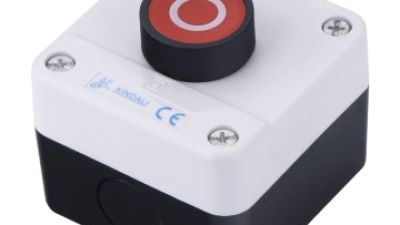
The 2024 industrial controls market outlook highlights continued demand for compact, dependable operator interfaces that can support efficient equipment control in manufacturing, commercial facilities, and process environments. Within this trend, 1-hole red control boxes offer a practical solution for applications requiring a clearly visible command point in a simple, space-saving format. Their straightforward design can help operators identify and activate essential functions quickly while supporting cleaner panel layouts and easier installation.
The XDL25-BE112 is a high-quality 1-hole control box equipped with a flush push button and spring return functionality. This configuration allows the button to return to its normal position after release, making it suitable for momentary control operations. Its durable construction is designed for reliable performance in demanding industrial and commercial settings. With an IP40/IP54 protection rating, the enclosure can help limit the impact of dust and moisture, depending on the installation environment and configuration. These features make the unit a suitable choice for machinery controls, auxiliary operating stations, and other applications where compact design, visible operation, and dependable daily use are important.
Request material specifications, contact ratings, LED voltage options, protection ratings, and service-life data. Ask for recent test records. Photos help, but they are not enough.
A showroom sample may receive extra attention. Request a sample from the normal production line. Check return feel, terminal finish, light uniformity, and label clarity. Small details matter.
Ask how engineers select switching currents for your load. Discuss soldering control, assembly torque, inspection steps, and failure handling. Vague answers deserve caution.
Look for incoming inspection records, contact resistance checks, brightness tests, switch-life results, and final inspection reports. Batch numbers should connect products with materials and inspectors. Traceability matters.
Confirm the certificate number, issuing laboratory, product scope, and renewal date. The approval should match your product and destination market. A certificate alone proves little.
Check storage conditions, calibration labels, production records, and rejected units. Rejected parts reveal more than polished samples. Notice whether workers separate defective products clearly.
Test the button with your real load, wiring length, panel thickness, and gloves. Consider humidity, vibration, repeated pressing, and temperature changes. Record every failure openly.
Do not compare unit prices alone. Check tooling, packaging, inspection, spare parts, delivery terms, and replacement policies. A cheap quotation may omit important costs.
Install the sample in the actual panel. Check bezel stability during vibration and light visibility under factory lighting. Test terminals with the intended wire size. Do not guess.
Be cautious about perfect claims, unusually long lifetime promises, and missing test conditions. Some short tests hide long-term contact wear. I may score an early supplier too generously. Recheck the decision.
An Illuminated Push Button combines switching functionality with clear visual feedback, making it useful for control panels, machinery, automation systems, and user interfaces. When selecting a supplier in China, buyers should examine the button’s illumination method, voltage range, switching life, protection rating, materials, installation style, and compatibility with the intended application. Reliable suppliers should also demonstrate consistent production processes, product testing, traceability, and compliance with relevant quality and safety standards.
A thorough supplier comparison should consider manufacturing capacity, customization options, sample availability, communication efficiency, pricing, lead times, and minimum order requirements. Buyers should confirm whether the supplier can provide customized symbols, colors, shapes, terminals, and electrical specifications without compromising durability or performance. The best supplier is not necessarily the one offering the lowest price, but the one that provides stable quality, transparent documentation, responsive service, and flexible production support. By evaluating these factors together, businesses can choose an Illuminated Push Button supplier that meets both technical requirements and long-term purchasing goals.