+86-18957717686


Industrial Push Buttons still play a key role as control interfaces in factories, machine rooms, packaging lines, and even outdoor processing setups. In this guide, we’re taking a closer look at the top 10 industrial push buttons, not just based on how they look but on how well they actually perform in real-world conditions. We’ve considered stuff like contact reliability, electrical ratings, ingress protection, how much force you need to push them, how deep they sit in their mounts, how long they last, and how operators feel about them. Brands like Schneider Electric, Siemens, Eaton, ABB, Rockwell Automation, Omron, IDEC, EAO, and Honeywell each bring their own strengths to the table — and their products aren’t exactly interchangeable. You gotta match the right button to the job.
It’s the small parts that really matter. For example, a red mushroom emergency-Stop Button needs to be super easy to spot and reset — no fumbling around. A momentary push button should give you that satisfying click, even if your gloves are oily. And an illuminated button? It’s gotta stay visible even next to a noisy conveyor belt. Plus, akeyed selector pendant controller with two push buttons might be just what you need if you’re controlling access or operating a hoist simply. On the flip side, a sealed metal button can handle washdown conditions and impacts like a champ. The truth is, each factory is different, so it’s not one-size-fits-all.
You know, Don Norman — a pretty influential guy in human-machine interface design and a former Apple Fellow — once said, “Design is really an act of communication, which means having a deep understanding of the person with whom the designer is communicating.” That totally applies here. The operator needs to understand what the button does instantly — especially when stuff’s hectic. When you’re picking a push button, it’s also worth thinking about how easy it is to find documentation, whether replacement parts are easy to get, how the terminals are designed, and if it works with what’s already in place. No single ranking is perfect. A button that works great in a clean control cabinet might struggle in dusty environments, vibrations, or cold storage. So, always check the datasheet, installation instructions, certifications, and the actual operating conditions before making a call. The most expensive isn’t always the best — it’s the one that communicates clearly and keeps working day in and day out.
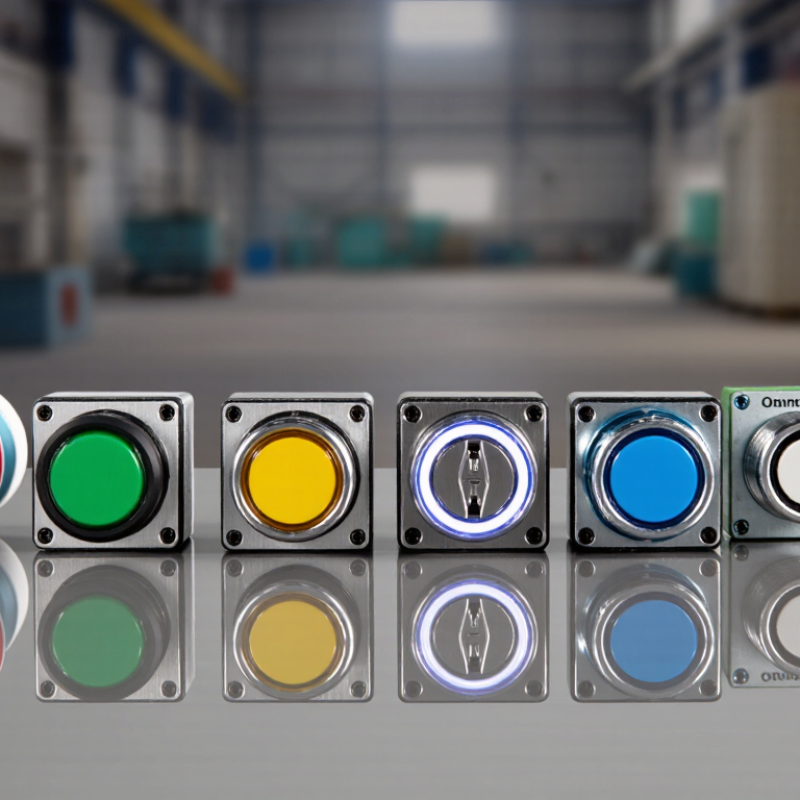
Industrial push buttons are manual control devices, not merely plastic switches. Under IEC 60947-5-1:2016, they belong to low-voltage control-circuit devices. The standard addresses rated insulation voltage, electrical endurance, terminals, protection, and mechanical performance. A push button should open or close a defined control circuit reliably. Its contact arrangement matters. So does its rated utilization category.
IEC 60204-1:2016+A1:2021 applies when buttons control machinery. It links the device to safe stopping, emergency stop functions, control-circuit protection, and prevention of unintended operation. Red actuators commonly identify emergency functions, but color alone proves nothing. The complete machine design must confirm accessibility, visibility, reset behavior, and circuit performance. In field inspections, unclear labels remain a stubborn weakness. Short travel can also create accidental activation.
The practical top ten often includes momentary, maintained, illuminated, selector, mushroom-head, emergency-stop, key-operated, guarded, foot-operated, and dual-contact forms. Selection should follow the task, environment, and risk assessment.
The International Federation of Robotics reported 541,302 industrial robots installed worldwide in 2023, showing how dense modern control environments have become (IFR, World Robotics 2024). More interfaces mean more opportunities for confusion.
The International Labour Organization reported nearly three million work-related deaths annually, reinforcing the value of disciplined machine controls (ILO, 2023). IEC compliance is not a label to copy from a catalogue. It requires verification, documentation, and honest review of actual operating conditions.
What Are the Top 10 Industrial Push Buttons? A defensible ranking begins with measurable evidence, not appearance. I would score ten button types across contact ratings, mechanical life, IP codes, and NEMA enclosure types. IEC 60947-5-1 separates utilization categories such as AC-15 and DC-13. That distinction matters because a 10-amp resistive rating may not safely represent a motor-control load. Datasheet numbers need context.
Mechanical life should be tested separately from electrical life. A button rated for one million mechanical operations may wear faster under vibration, side pressure, or contaminated gloves. IEC 60529 defines IP65 as dust-tight protection with water jets. IP67 adds temporary immersion protection. NEMA 250 Type 4X addresses indoor or outdoor protection against water, dust, and corrosion. These ratings are not interchangeable. A careful top-ten list should reward verified test conditions, readable certificates, and stable contact resistance.
Tips: Record the actual load, voltage, switching frequency, and enclosure exposure before scoring. Check whether the published rating covers inductive loads. I would give higher marks to clear test reports than impressive cycle claims. My ranking could still change after field trials. That is the honest weakness. A laboratory score cannot fully predict a cold, oily control cabinet. Also inspect terminal access, actuator force, and reset visibility. In practice, a slightly lower-rated button can perform better when installation errors are less likely.
Ranking score: contact rating 30%, mechanical life 30%, IP protection 20%, and NEMA enclosure type 20%. The figures are representative benchmarks for common industrial configurations. Actual ratings vary by voltage, load type, actuator design, and certified product configuration. IP codes follow IEC 60529 terminology, while NEMA types follow NEMA 250 terminology.
What Are the Top 10 Industrial Push Buttons?
For standard industrial control panels, 22 mm momentary push buttons remain a practical choice. They fit common mounting holes and support quick operator input. The top 10 options should be compared by contact arrangement, actuator type, ingress protection, and mechanical life. IEC 60947-5-1 defines key requirements for control-circuit devices, including switching performance and insulation. A compliant product is safer to specify than one chosen only by appearance.
In field inspections, clear tactile feedback often matters more than decorative illumination. A firm reset action helps operators work near pumps, conveyors, and compact machine enclosures. Many industrial selectors offer IP65 or higher protection, but installation quality still decides real performance. Grand View Research reported continued growth in industrial automation investment through 2023, increasing demand for reliable human-machine interfaces. Yet ratings can be misunderstood. IP protection does not guarantee resistance to chemicals, impact, or incorrect cable entry. That detail is easy to miss.
Tips: Compare 22 mm momentary push buttons under the same voltage and load. Check normally open and normally closed contacts. Confirm the panel thickness. Leave space for gloves. For multi-function stations, a key selector pendant with three push buttons can separate enable, stop, and reset commands. Use labels that remain readable after cleaning. Test the button repeatedly before approval. It sounds obvious. It is not. A minor wiring assumption can create unnecessary downtime, so review the circuit with a qualified control engineer before production.
Industrial push buttons vary widely, but emergency-stop devices demand the strictest evaluation. ISO 13850 defines the emergency-stop function as a protective measure, not a routine control. It must remain available in every operating mode. The actuator should be clearly identifiable, rapidly accessible, and designed to latch after activation. Resetting the device must not restart machinery. That distinction matters.
IEC 60947-5-5 focuses on mechanical latching and reliable release arrangements for emergency-stop devices. A red actuator on a yellow background supports rapid recognition, especially beside guarding or conveyor transfer points.
During a practical inspection, technicians should check contact operation, reset direction, label visibility, and access from normal working positions.
A selector switch with two push buttons may control operating modes, but it cannot replace a compliant emergency stop. Not merely a red button.
The urgency is measurable. The International Labour Organization estimated 2.93 million work-related deaths and 395 million non-fatal injuries annually in its 2023 report. The U.S. Bureau of Labor Statistics recorded 5,283 fatal workplace injuries in 2023.
These figures do not prove that emergency stops prevent every incident. They do show why dependable control design deserves scrutiny. One imperfect assumption remains common: installing the device is treated as completing the safety task. Verification, wiring review, functional testing, and documented maintenance are equally important.
What Are the Top 10 Industrial Push Buttons?
In 24 VDC control panels, the best push button is not always the most expensive. It must match voltage, current, ingress protection, actuation force, and maintenance needs. A 2024 MarketsandMarkets report projects the industrial automation market to reach over USD 300 billion by 2028. That growth increases demand for clear, dependable operator interfaces.
Illuminated push buttons suit alarm resets, machine starts, and status feedback. Use controlled brightness when operators wear gloves or work under reflective lighting. Selector switches provide maintained choices, such as Hand, Off, and Auto. A selector switch with 3 push buttons can separate mode selection from start and stop commands, but its layout needs careful testing. Keyed push buttons add access control for setup or service functions. They are useful, not foolproof. Lost keys remain a practical weakness.
Piezo push buttons resist dirt, moisture, and heavy cleaning better than many mechanical designs. Their solid-state sensing can also reduce contact wear. However, operators may dislike the lighter tactile response. IEC 60947-5-1 remains a key reference for low-voltage control devices, including switching performance and endurance considerations. IP ratings should be verified against IEC 60529, not assumed from appearance.
Start with voltage.
Grand View Research reported continued expansion in industrial automation through 2030, yet field reliability still depends on installation quality. Check terminal torque, cable routing, illumination polarity, and emergency-stop separation. A perfect ranking is impossible. Real panels are messier. Test buttons with cold hands, gloves, dust, and repeated operation before approving the final design.
Industrial push buttons are not interchangeable once dust, water, or cleaning pressure enters the process.
A practical top ten includes metal momentary buttons, metal latching buttons, illuminated buttons, selector-push controls, guarded buttons, mushroom-head buttons, emergency-stop devices, plastic momentary buttons, piezo buttons, and compact panel buttons. Each type needs an enclosure rating that matches its real environment.
IP65 protects against dust and water jets, making it suitable for indoor machinery and routine wipe-downs.
IP67 adds temporary immersion protection, which helps near wash areas or accidental flooding. IP69K is designed for high-temperature, high-pressure cleaning. Metal housings usually resist impact, vibration, and repeated operation well. Plastic housings can reduce corrosion risks, electrical conduction, and cost. However, material alone does not prove protection. Seals, panel thickness, cable entry, and installation quality matter. Some assumptions fail.
Tips:
Check the complete assembly, not only the button head. Request test evidence for the stated IP rating. Match the seal material to oils, detergents, and temperature changes. For IP67, confirm the immersion time and depth. For IP69K, inspect the test angle, water temperature, and pressure conditions. A button may survive laboratory testing but fail after poor mounting. Leave no gap around the panel cutout. Also consider gloves, visibility, reset force, and accidental activation. In practice, a well-installed plastic button may outperform a poorly sealed metal one. That detail is easy to overlook.
What Are the Top 10 Industrial Push Buttons?
Selecting the top 10 industrial push buttons requires more than comparing prices. Safety, certification, and total cost of ownership should guide the decision. In panel inspections, I look for clear actuation, firm reset action, and reliable operation with gloves. A button should remain visible under poor lighting. Its housing should also resist oil, dust, vibration, and frequent cleaning.
The strongest candidates usually include emergency Stop Buttons, illuminated push buttons, momentary switches, maintained switches, selector-operated buttons, and guarded controls. Each model should match the machine’s voltage, current, and duty cycle. Check ingress protection ratings and mechanical endurance claims carefully. Certification should be traceable to recognized testing requirements in the installation region. A printed symbol alone proves little. Independent documentation matters.
TCO reveals the less obvious costs. A low-priced button may require earlier replacement, extra adapters, or longer maintenance shutdowns. Evaluate contact block life, spare-part availability, wiring time, and replacement access. A removable front module can reduce service labor. However, modular designs may introduce more connection points. That risk deserves review. Test samples in realistic conditions, including cold hands, oily gloves, repeated impacts, and awkward viewing angles. Datasheets rarely capture every field problem. A button that feels excellent on a workbench may disappoint beside a vibrating conveyor. Reliability comes from evidence, not appearance.
| Rank | Industrial Push-Button Type | Typical Safety Features | Ingress Protection | Common Certifications | Typical Electrical Rating | Mechanical Life | Safety Score /10 | Estimated 5-Year TCO USD | Best-Fit Application |
|---|---|---|---|---|---|---|---|---|---|
| 1 | Emergency-Stop Mushroom Button | Latching action, twist or key release, positive-opening NC contacts, shrouded actuator | IP65–IP69K; often NEMA 4X | IEC 60947-5-1, ISO 13850, UL 508, CSA C22.2 No. 14 | Up to 10 A at 240 V AC, depending on contact block | Typically 100,000 operations | 10.0 | $95–$180 | Machinery, conveyors, packaging lines, and robot cells |
| 2 | Illuminated Momentary Push Button | Color-coded status indication, guarded bezel options, spring-return action | IP65–IP67; NEMA 4/4X options | IEC 60947-5-1, UL 508, CSA C22.2 No. 14 | 3 A at 250 V AC or 24 V DC LED circuits | Typically 1,000,000 mechanical operations | 9.2 | $70–$145 | Operator panels, control cabinets, and machine interfaces |
| 3 | Key-Release Emergency-Stop Button | Prevents casual reset, positive-opening contacts, two-position or three-position latching | IP65–IP67; NEMA 4X options | IEC 60947-5-1, ISO 13850, UL 508 | Up to 10 A at 240 V AC, configuration dependent | Typically 100,000 operations | 9.1 | $115–$210 | Restricted-access machinery and high-risk production zones |
| 4 | Heavy-Duty Metal Push Button | Metal actuator, impact-resistant construction, optional shroud and locking ring | IP65–IP67; NEMA 4/4X options | IEC 60947-5-1, UL 508, CSA C22.2 No. 14 | Up to 10 A at 240 V AC | Typically 1,000,000 operations | 8.8 | $80–$160 | Metalworking, material handling, and harsh factory environments |
| 5 | Flush-Mount Momentary Push Button | Reduced accidental activation, spring return, optional protective bezel | IP65–IP67 | IEC 60947-5-1, UL 508, CSA C22.2 No. 14 | Up to 5 A at 250 V AC | Typically 1,000,000 operations | 8.5 | $45–$95 | General machine control and compact control stations |
| 6 | Selector-Actuated Push Button | Accidental-operation resistance through rotary selection and defined operating states | IP65–IP66 | IEC 60947-5-1, UL 508, CSA C22.2 No. 14 | Up to 10 A at 240 V AC | Typically 250,000–1,000,000 operations | 8.3 | $60–$125 | Mode selection, setup, maintenance, and manual/automatic control |
| 7 | Piezoelectric Sealed Push Button | No moving contact mechanism, resistant to moisture and contamination, low actuation force | IP67–IP69K; NEMA 4X options | UL 508 and IEC-based evaluation, depending on configuration | Typically 24 V DC signal switching | Often rated above 5,000,000 actuations | 8.1 | $125–$260 | Washdown areas, outdoor equipment, and contamination-prone controls |
| 8 | Double-Headed Push Button | Two independent actuators in one mounting position, clear function differentiation | IP65–IP67 | IEC 60947-5-1, UL 508, CSA C22.2 No. 14 | Up to 5 A at 250 V AC per contact set | Typically 1,000,000 operations | 7.9 | $65–$135 | Compact panels requiring start/stop or forward/reverse functions |
| 9 | Capacitive-Touch Industrial Button | Sealed touch surface, no mechanical travel, configurable status feedback | IP65–IP67 | Certification varies by complete assembly; industrial control approvals may apply | Typically 12–24 V DC electronic output | Often above 1,000,000 activations | 7.6 | $100–$220 | Hygienic interfaces, public-facing industrial equipment, and sealed enclosures |
| 10 | Basic Plastic Momentary Push Button | Spring return, insulated housing, optional contact-block redundancy | IP54–IP65 | IEC 60947-5-1 or UL 508, depending on the assembly | Typically 3–5 A at 250 V AC | Typically 250,000–1,000,000 operations | 7.2 | $30–$75 | Protected indoor panels and cost-sensitive automation projects |
They fit common panel holes and provide quick operator input. Clear tactile feedback helps near pumps, conveyors, and compact enclosures. Simple is often better.
Compare contact arrangement, actuator style, ingress protection, mechanical life, and rated load. Check normally open and normally closed contacts. Compare products under identical voltage and load conditions.
Confirm panel thickness, sealing, cable entry, and available space. Leave enough room for gloved operators. A small gap can weaken protection.
No. IP65 protects against dust and water jets under specified test conditions. It does not automatically prove chemical, impact, or cable-entry resistance. Installation still matters.
IP67 suits areas exposed to temporary immersion or accidental flooding. IP69K suits high-temperature, high-pressure cleaning environments. Verify temperature, pressure, angle, immersion depth, and test duration.
Metal housings often tolerate impact, vibration, and repeated use. Plastic housings may reduce corrosion, electrical conduction, and cost. Material alone proves little. Seals and mounting quality can matter more.
The actuator should be clearly visible, quickly accessible, and mechanically latched after activation. A red actuator on a yellow background supports rapid recognition. Resetting must not restart the machinery.
No. A selector switch may choose operating modes, but it does not replace a compliant emergency stop. Emergency-stop functions require suitable design, wiring, verification, and testing. It is not merely a red button.
Operate the button repeatedly and inspect contact switching, reset action, labels, and mechanical response. Review the circuit with a qualified control engineer. Document maintenance and functional checks. One wiring assumption can cause unnecessary downtime.
This guide explains how to identify the top 10 industrial push buttons for modern control systems by combining safety, durability, certification, and total cost of ownership. It begins by defining industrial push buttons within the principles of IEC 60947-5-1 and IEC 60204-1, then establishes practical ranking criteria, including contact ratings, mechanical life, ingress protection, and NEMA enclosure classifications. Standard 22 mm momentary buttons are compared for general control panels, while emergency-stop devices are assessed according to ISO 13850 and IEC 60947-5-5.
The review also considers illuminated, selector, keyed, and piezoelectric designs used in 24 VDC systems. Metal and plastic constructions are matched with IP65, IP67, and IP69K environments to clarify their suitability for dust, water, cleaning, and demanding industrial conditions. The final selection emphasizes dependable operation, clear status indication, safe reset behavior, recognized compliance, maintainability, and long-term value, helping users choose reliable control components for different applications.