Picking the right Push Button on/off switch can really make a difference in safety, uptime, and giving operators confidence—whether you're in manufacturing, labs, or just about any industry. If you're shopping around, folks usually compare things like contact ratings, mounting sizes, actuator styles, terminal designs, and how well it handles tough environments before hitting that 'buy' button. On the surface, a switch might look simple, but inside, its build quality really decides how reliably it’ll keep working after thousands of cycles.
This guide dives into the practical stuff for control panels, machinery, lab equipment, lighting setups, or industrial workstations. We look at options like momentary vs. maintained actions, normally open vs. normally closed contacts, Led Indicators, and how well they resist dust or moisture. For example, that Push On Push Off Light Switch is handy when you want a clear, retained light command—just don’t pick it based on looks alone.
Of course, buying decisions aren’t just about specs. You'll want to check out datasheets, run some samples, chat with suppliers, and keep quality consistent. Big brands like Schneider Electric, Eaton, Siemens, and C&K have solid options, but availability and details can vary depending on where you are. Always double-check operating temperatures, electrical loads, lifespan ratings, and make sure everything fits your specific needs. Local installation rules are still a thing, so don’t forget those.
Little details can make all the difference. Going for a cheap model might save some cash upfront, but if the actuator is weak or the terminals don’t fit properly, you’ll likely regret it later on. On the flip side, just because a switch is expensive doesn’t mean it’s automatically the best pick. This guide compares top push-button options based on real-world info—though, of course, some products may need a closer look, especially if they’ll face vibration, frequent cleaning, or outdoor conditions. The key to reliable sourcing? Transparent specs, responsive tech support, and, ideally, a thorough inspection before buying in bulk.
Push Button On Off Switches: Definition and Basic Operating Principles
Push Button On Off Switches: Definition and Basic Operating Principles
A push button on off switch is a manually operated control that opens or closes an electrical circuit. Pressing the button changes contact position. Releasing it may keep that position or return through a spring mechanism. This distinction defines latching and momentary operation. In practical equipment, the switch may control a lamp, motor starter, safety relay, or low-voltage signal. Contact ratings matter. Voltage, current, inrush, and load type must match the application. A 2024 market analysis by Grand View Research reported continuing growth in industrial control components, driven by factory automation and machine upgrades. The exact forecast varies between reports, so buyers should treat market numbers as directional, not absolute.
Inside the switch, normally open contacts close after pressing. Normally closed contacts open instead. A multimeter can verify this behavior before installation. It is a small check, but it prevents expensive wiring mistakes. IEC 61058-1 provides safety requirements for switches used in appliances, while IEC 60947-5-1 addresses control-circuit devices in industrial systems. These standards do not replace local compliance testing. Engineers should also review actuator travel, panel thickness, terminal style, sealing level, and expected electrical life. I have found that mechanical feel is often overlooked. It can affect operator confidence and repeated-use accuracy.
Tips: Confirm the circuit diagram, load category, and contact rating before purchase. Test ten sample operations under realistic conditions. Consider dust, moisture, gloves, and limited visibility. A low-cost button can become unreliable when its environment is misunderstood.
Top Push Button On Off Switches for Global Buyers
Push button on/off switches are manually operated electrical devices that open, close, or change circuit paths through mechanical contacts. The chart compares common contact arrangements by their basic terminal count.
SPST uses one pole and one circuit path, while SPDT uses one pole and two selectable paths. DPST and DPDT use two poles, allowing two circuits to be controlled simultaneously. Terminal counts shown represent the basic contact arrangement and may vary when additional indicator, locking, or auxiliary features are included.
Key Types of Push Button On Off Switches for Different Applications
Choosing the right Push Button On Off Switch starts with the circuit’s real behavior. A maintained switch stays on after pressing, making it useful for control panels, lighting, and equipment isolation. A momentary switch changes state only while pressed. It suits door controls, machine commands, and reset functions. This distinction seems simple. It is often missed.
For dusty workshops or outdoor cabinets, sealed push buttons with suitable IP protection reduce failures from moisture and particles. An illuminated version improves visibility on dim production lines, but its voltage and current must match the control circuit. Metal bodies tolerate repeated handling, while plastic bodies can lower cost and electrical exposure. Check contact configuration, such as normally open or normally closed, before ordering. A wrong contact arrangement can reverse the intended operation.
Global buyers should compare panel-hole diameter, terminal style, electrical rating, operating temperature, and certification documents. Samples deserve practical testing: press the switch with gloves, inspect contact stability, and cycle it repeatedly under the expected load. I have seen attractive controls fail because the actuator was too shallow for the panel. That mistake is easy to prevent, although product sheets do not always show the full installation depth. Leave room behind the panel. Also verify replacement availability and clear wiring instructions before approving a larger purchase.
How to Select the Right Switch for Voltage, Current, and Environment
Selecting an On And Off Push Button Switch starts with the circuit, not the panel cutout. Check the equipment’s rated voltage, operating current, and inrush current. A motor may briefly draw several times its running current. That short surge can weld undersized contacts. IEC 61058-1 and IEC 60947-5-1 provide useful switching and control-device requirements, but local certification rules still matter.
Leave margin. A practical design often selects contacts above the measured load, then confirms the rating for AC or DC service. DC can be harder to interrupt because its arc does not naturally cross zero. The International Energy Agency reported that electric motor systems use about 53% of global electricity. This makes reliable control hardware important in pumps, conveyors, and fans. Test the real load.
Environment changes the choice. IEC 60529 IP ratings describe protection against dust and water, while vibration, oil mist, salt air, and temperature require additional review. An IP65 button may resist water jets, yet its cable entry can remain vulnerable. A sealed actuator, guarded bezel, and corrosion-resistant terminals may prevent field failures. Small detail.
For a dusty control cabinet, confirm the enclosure rating and maintenance access. For outdoor equipment, check UV exposure and freezing temperatures. For emergency functions, use a switch designed for that purpose, not a convenient substitute. I have seen specifications copied from catalogs without checking derating curves. That is an avoidable weakness. Record the measured load, ambient temperature, switching frequency, and expected operating cycles before ordering. Industry testing should support the decision, not replace site verification.
Installation, Wiring, and Compatibility Considerations
Choosing the right push button requires more than checking its appearance. Global buyers should confirm voltage, current, contact type, and panel cutout size. A Push Button On Off Switch With Led may need separate LED wiring. Check whether the indicator accepts AC or DC power. Never assume similar terminals perform the same function.
Installation starts with a clean, measured panel opening. Remove burrs before fitting the switch. Loose mounting can cause vibration and unreliable contact. During wiring, isolate the power source and follow the terminal diagram. Use wire gauges suitable for the expected load. For motors, heaters, or other high-current equipment, a relay or contactor may protect the switch. The LED often has polarity, while the switch contacts may not. That small detail causes many avoidable failures. I have seen correct-looking installations fail because the lamp voltage was overlooked.
Tips: Test the switch with a multimeter before final assembly. Label each wire clearly. Confirm the IP rating for dusty or wet locations. Compare thread size, body depth, and connector space before ordering. A switch can fit the hole yet fail behind the panel. Compatibility also depends on temperature, vibration, and duty cycle. Datasheets are more reliable than product photos. One imperfect habit is rushing the first test; slower checking usually prevents rewiring later. Use a qualified electrician when the circuit carries hazardous voltage.
Safety Standards, Testing Methods, and Global Purchasing Tips
Global buyers should treat push-button on/off switches as safety components, not simple catalog items. IEC 61058-1 specifies requirements for switches used in appliances, including endurance and electrical safety testing. Request evidence for dielectric withstand, insulation resistance, temperature rise, and mechanical life. Test samples under the intended voltage, current, load type, and operating cycle. Resistive loads are easier than motor or lamp loads.
Safety margins matter. For wet or dusty equipment, verify the enclosure rating under IEC 60529, then check whether the rating applies after installation. An ISO/IEC 17025-accredited laboratory can provide more reliable test results. However, certificates can cover a different housing, terminal, or production site. This detail is often missed.
Purchasing teams should compare rated AC and DC loads separately, because switching behavior changes significantly. Confirm contact material, terminal size, panel thickness, operating temperature, and approved wire ranges. Ask for batch traceability and a change-notification process. A small incoming inspection should measure dimensions, actuation force, markings, and sample continuity. It should also repeat basic insulation checks.
The Global E-waste Monitor 2024 reported 62 million tonnes of electronic waste in 2022, with only 22.3% formally collected and recycled. Longer service life reduces replacement waste. Therefore, buyers should request endurance data, spare-part policies, and repair-friendly construction. No checklist is perfect. Review failures honestly, especially when low price influenced the decision.
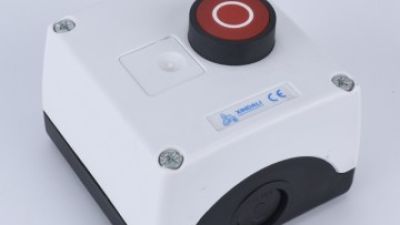
Outdoor Waterproof Push Button Control Box: A Guide to the Red 22mm Emergency Start-Stop XB2 Switch
Outdoor waterproof push-button control boxes are essential wherever machinery must be operated safely in changing weather conditions. A compact enclosure with a red, 22 mm flush-mounted button provides a clear emergency start-stop interface, allowing operators to respond quickly without searching for complicated controls. The spring-return design automatically resets after release, supporting smooth, repeatable operation in industrial equipment, commercial facilities, gates, pumps, and outdoor production areas.
Protection ratings are especially important for exposed installations. Under IEC 60529 classification data, IP54 indicates protection against limited dust ingress and water splashes from any direction, while IP65 provides dust-tight protection and resistance to low-pressure water jets. A control box designed to meet both levels offers greater flexibility when selecting an installation location. Its durable housing and sealed construction help reduce the risk of moisture-related faults, while the flush button minimizes accidental contact and keeps the panel easy to clean.
As industrial automation expands, reliable human-machine interfaces remain a practical priority. Recent industry research on smart manufacturing continues to identify equipment uptime, operator safety, and maintenance efficiency as key investment factors. For these applications, a red emergency start-stop switch combines visual recognition with simple mechanical operation. Choosing a weather-resistant control box with spring return functionality can improve daily usability and provide dependable local control in demanding indoor or outdoor environments.
Conclusion
Push Button On Off Switches provide a simple and reliable way to control electrical equipment by opening or closing a circuit through a manual button action. This article explains their basic operating principles and compares common types, including momentary and maintained-action designs, illuminated options, emergency-stop versions, and switches suited to panel or industrial use. It also highlights essential electrical and mechanical specifications, such as rated voltage, current capacity, contact configuration, actuator style, mounting size, service life, and protection against dust or moisture.
For global buyers, selecting the right Push Button On Off Switch requires matching the switch with the equipment’s voltage, current, operating frequency, installation environment, and wiring system. Proper terminal identification, secure mounting, compatibility checks, and safe installation practices are equally important. The article also reviews safety standards, routine testing methods, documentation, packaging, lead times, and supplier communication, helping purchasers evaluate product quality and reduce installation or sourcing risks across different markets.

 +86-18957717686