
 +86-18957717686



Technical Buying Guide · Hydraulic Controls · OEM / Replacement
A hydraulic Pendant Controller may look like a simple box with UP and DOWN buttons. For mobile equipment, however, a successful replacement or OEM design depends on matching the 12V/24V control circuit, contact logic, Enclosure protection, wiring and operator safety requirements—not just the shape of the housing.
Quick answer:Choose the pendant by checking (1) the machine's control voltage and electrical ratings, (2) required commands and spring-return behavior, (3) environmental protection such as IP54 or IP65, (4) wiring, connector and interlock requirements, and (5) the complete machine safety design. Ask for a wiring diagram or verified pinout before ordering a replacement.
Where Are Hydraulic Pendant Controllers Used on Mobile Equipment?
Wired pendant controls provide a local operator interface for equipment that moves, lifts, opens, closes or actuates a hydraulic function. Typical applications include truck-mounted lifting systems, mobile hydraulic power units, utility-service vehicles, lifting platforms, industrial maintenance equipment and hydraulic attachments. The appropriate solution depends on the vehicle and machine manufacturer's control design.
Unlike a generic switch box, a mobile-equipment pendant may have to cope with vibration, moisture, repeated handling, cable pull and operator movement. Repair workshops and equipment builders also need predictable spare-part compatibility. That makes purpose-configured industrial pendant controllers useful when their electrical and mechanical specifications match the machine.
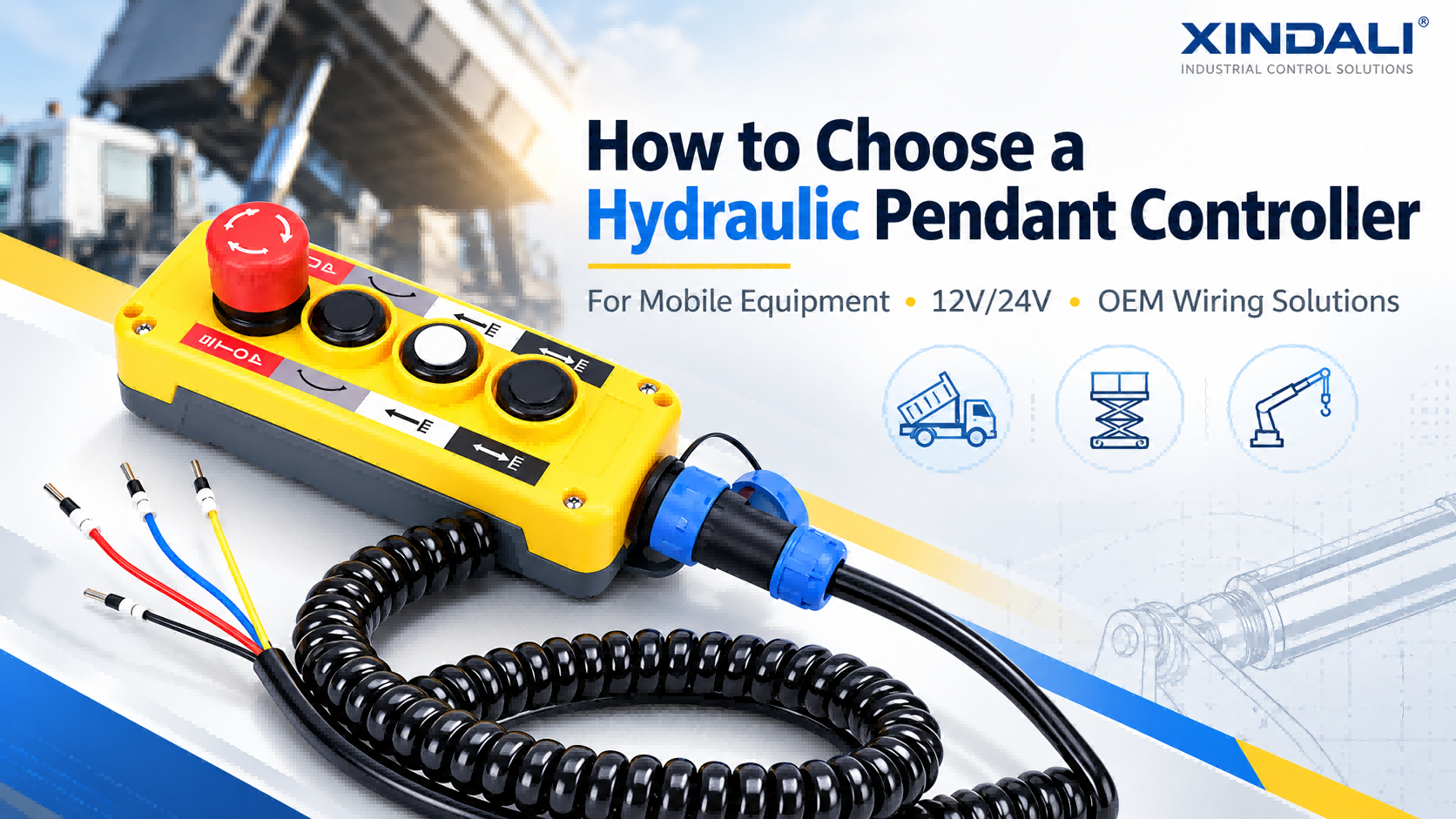
How Do You Choose the Right Hydraulic Pendant Controller? Seven Essential Checks
1. Confirm the actual control-circuit voltage: 12V, 24V or another value
Mobile equipment frequently uses 12V DC or 24V DC systems, but the vehicle battery voltage is not automatically the voltage present at each switch contact. Determine whether the pendant switches a relay input, solenoid-coil circuit, PLC input or another interface. Check current, contact ratings, inrush and the required utilization category where relevant.
For an OEM design, a complete wiring review comes before the choice of buttons, LEDs or other electronic features. See our related engineering article on hydraulic power-unit remotes with pre-wired cable and pump-side harnesses .
2. Define every command and its operating behavior
Write down the exact functions: UP/DOWN, EXTEND/RETRACT, OPEN/CLOSE, ENABLE, LIGHT or another machine-specific command. Specify whether each action must be momentary (spring return) or maintained. For operator-controlled movement, spring-return buttons are often appropriate, but final logic must follow the equipment design.
Two buttons can be sufficient for a basic function. More complex equipment may need a selector, enable function or additional feedback. Do not assume that adding a button creates the required electrical interlock: the machine control circuit must implement and validate the intended behavior.
3. Choose the correct IP rating for the complete assembly
Moisture and dust exposure affect the enclosure, button actuators, cable entry and connector interface. IP54 and IP65 are different enclosure protection classifications under IEC 60529. A rating applies to the specified and appropriately assembled product; it is not a universal guarantee against high-pressure washing, corrosion or water immersion.
For a vehicle that may be exposed to road spray, outdoor dust and routine cleaning, ask the supplier to confirm the exact rating of the finished pendant, including any cable gland and connector arrangement.
4. Check NO/NC contacts and the equipment pinout
Normally open (NO) and normally closed (NC) contacts perform different functions. Two units with identical external buttons may not be interchangeable if the internal contacts, commons, conductor colors or connector pins differ. For replacements, provide a verified wiring diagram or pinout and compare it against the supplier's drawing before installation.
5. Review interlocks and emergency-stop requirements
Opposing hydraulic commands, enabling functions and emergency stops may require an engineered safety or control arrangement. ISO 13850 describes emergency-stop design principles for machinery, while IEC 60947-5-1 addresses electromechanical control-circuit devices. Citing these standards does not imply that any particular XINDALI assembly has been certified to them.
Whether an emergency stop is necessary, and the performance required of that function, must be decided through the machine-level risk assessment. An emergency-stop actuator must never be treated as a substitute for a properly engineered safety circuit.
6. Specify cable length, strain relief and connectors
Confirm cable length, conductor count and size, flexibility, jacket material, connector type, strain relief and operating temperature. A pre-wired cable assembly can simplify repeat installation and field replacement—provided the approved pinout is consistent. A connector can speed service, but only when environmental protection and electrical compatibility are suitable.
7. Decide whether you need a spare part or an OEM assembly
A repair replacement usually prioritizes form, function, electrical equivalence and availability. An OEM project may also specify housing color, function symbols, branding, custom cable length and repeatable quality documentation. XINDALI offers custom push-button control boxes and configurable pendant platforms; each build should be reviewed against the target equipment specification.
IP54 vs IP65: Which Is Better for Outdoor Hydraulic Controls?
| Selection point | IP54 | IP65 |
|---|---|---|
| Solid-particle protection | Dust-protected; limited ingress permitted within the standard's criteria | Dust-tight under the test criteria |
| Water exposure | Protection against splashing water | Protection against water jets |
| Typical buying consideration | Consider for less exposed locations when the whole assembly is appropriate | Often preferable for exposed, dusty or splash-prone installations |
| Important limitation | Neither rating by itself establishes resistance to pressure washing, immersion, hydraulic fluids, road chemicals or vibration. | |
Specification warning: Protection levels vary by product and variant. For example, some current XDL10 models are listed as IP54 , while the XDL12 pendant platform is described as IP65 . Verify the rating for the exact configured product, rather than applying a family-level claim to every model.
Handheld Pendant or Fixed Hydraulic Control Box: Which Should You Choose?
Operator position matters as much as electrical specifications. A pendant allows the operator to move while maintaining a view of the moving equipment. A fixed control station defines a specific operating location. Neither approach is universally safer: visibility, reach, cable hazards and machine-specific safeguards determine the right choice.
| XINDALI option | Best starting point | What to confirm |
|---|---|---|
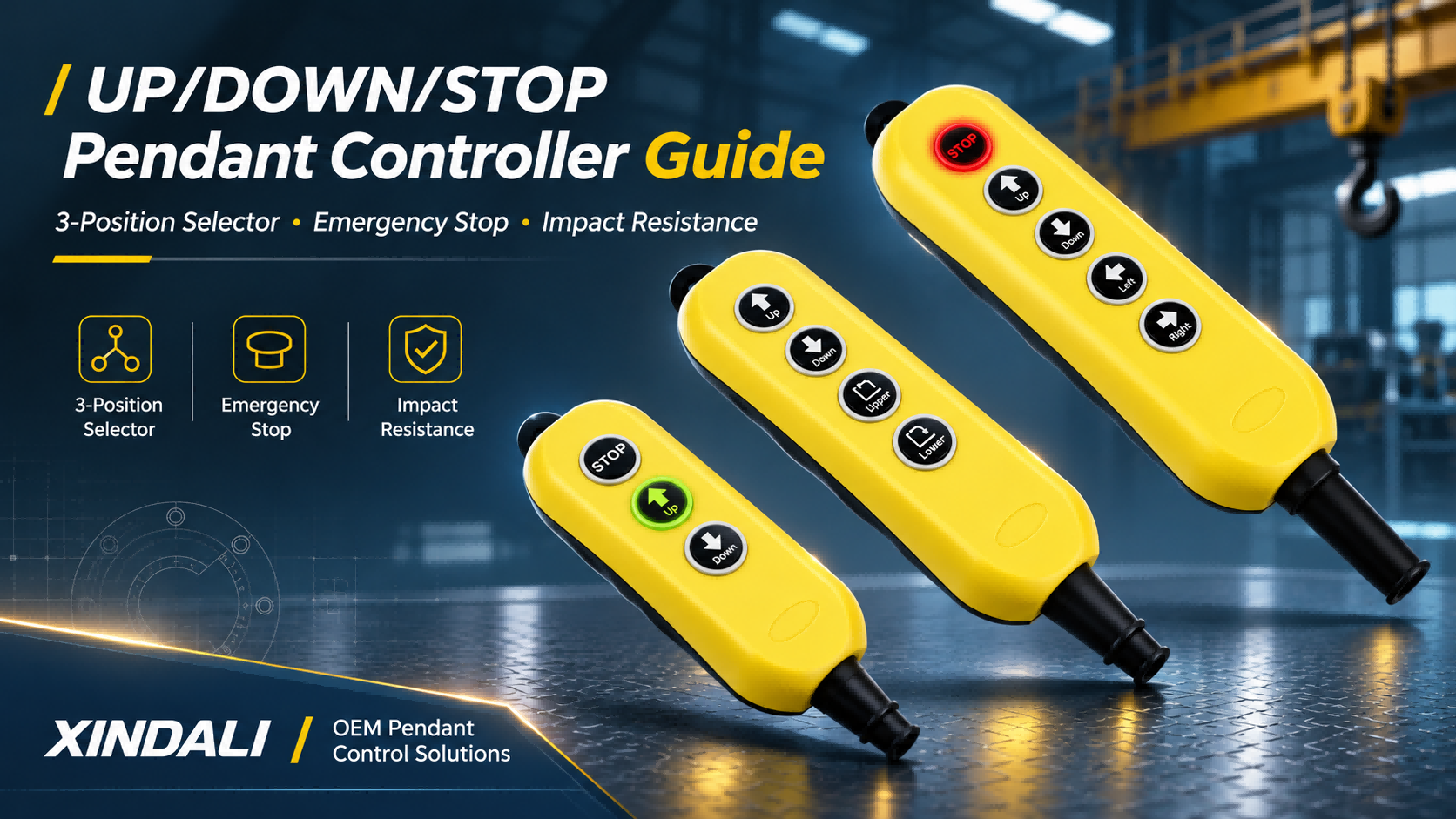
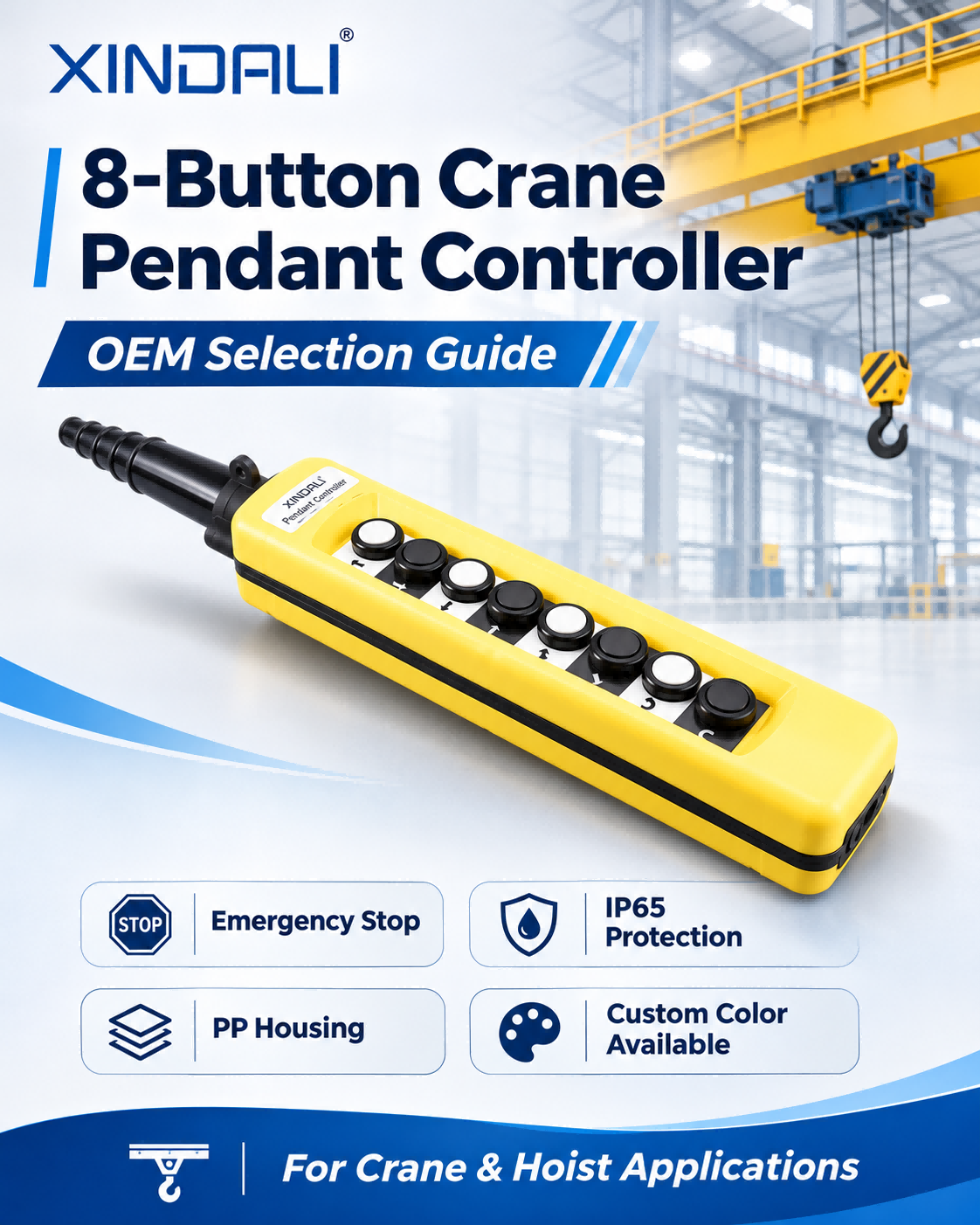
| XDL10 wired pendant | Compact multi-command handheld control; optional selector or emergency-stop variants | Exact model, model-specific IP rating, contacts and cable configuration |
| XDL12 IP65 pendant | Compact handheld applications requiring silicone-button design and selected signal options | Available functions, wiring, electronic features and project-specific ratings |
| XDL75 control station | Mounted industrial control station with configurable button layout | Exact enclosure and actuator combination, ingress rating and mounting method |
| XDL20–XCD tail-lift solution | Truck liftgate/tail-lift systems with matching wiring and accessory requirements | 12V/24V system logic, connector pinout and safety interface |
For purpose-built truck-lift equipment, see our custom tail-lift push-button control box . For more general mobile hydraulic equipment, begin with the required control functions and then choose the housing platform.
How Can You Match an Existing Hydraulic Pendant Without the Original Part Number?
When a part number is missing, compare the old and proposed assemblies systematically rather than judging by appearance. Use the following supplier-request checklist:
- Equipment description: machine type and intended functions, without needing to disclose your end customer.
- Voltage and circuit: actual control-circuit voltage, switching current and load/interface type.
- Button behavior: number, labels, momentary/maintained action and any enable/selector function.
- Safety requirements: interlock design and emergency-stop function, where applicable.
- Electrical drawings: verified NO/NC contact configuration, wiring diagram and connector pinout.
- Cable and mounting: length, cores, connector, strain relief and holder/magnet options.
- Environment: dust, splash/wash exposure, temperature, vibration and chemicals.
- Commercial requirements: required quantity, spare-parts plan, branding and target delivery schedule.
A supplier can compare your photograph, drawing and configuration with available components, but any replacement must be approved for the machine by the responsible technical team. For repeat repairs, retain a controlled wiring drawing and revision number so that future orders are consistent.
What Can Be Customized in an OEM Hydraulic Control Assembly?
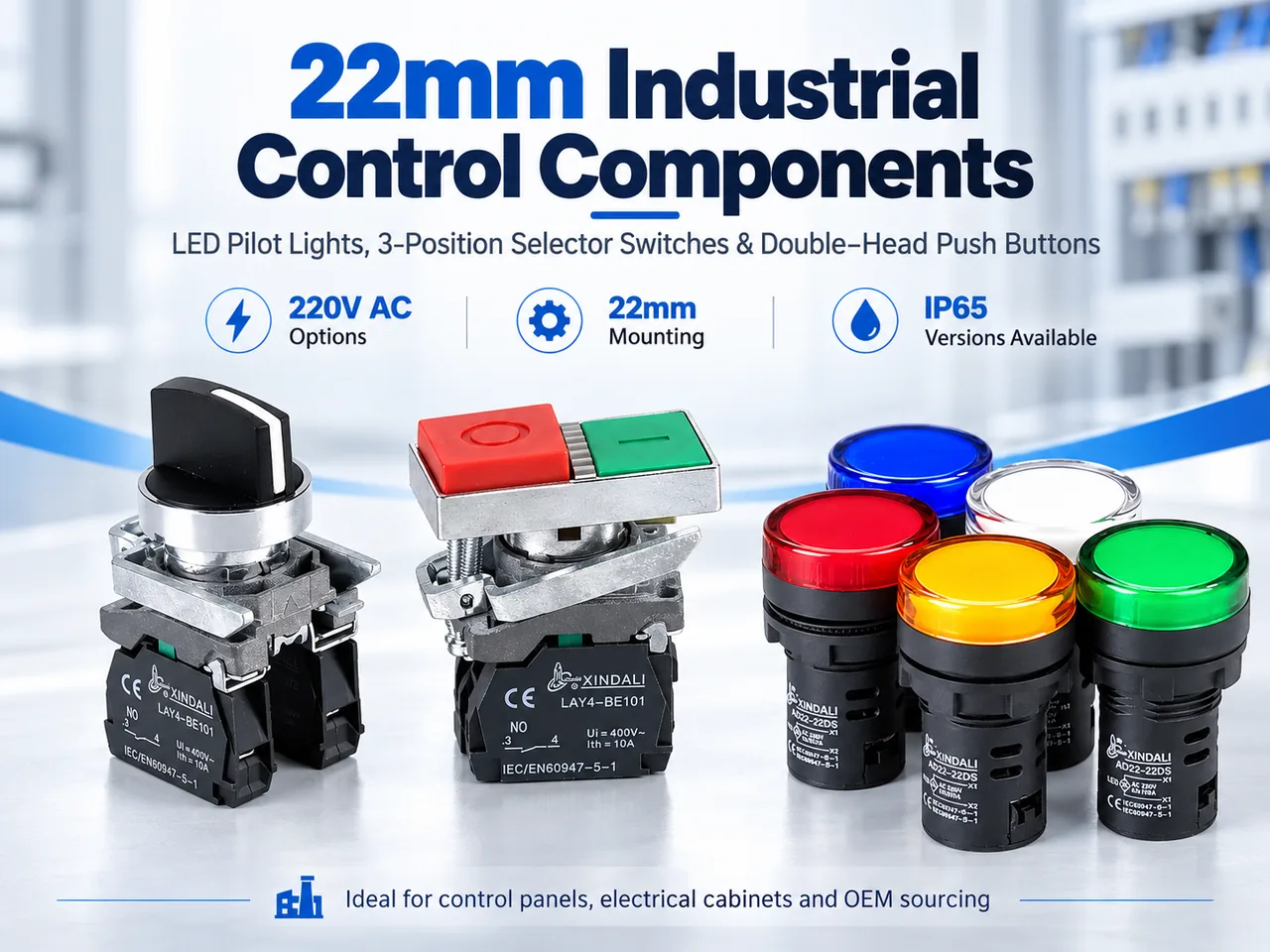
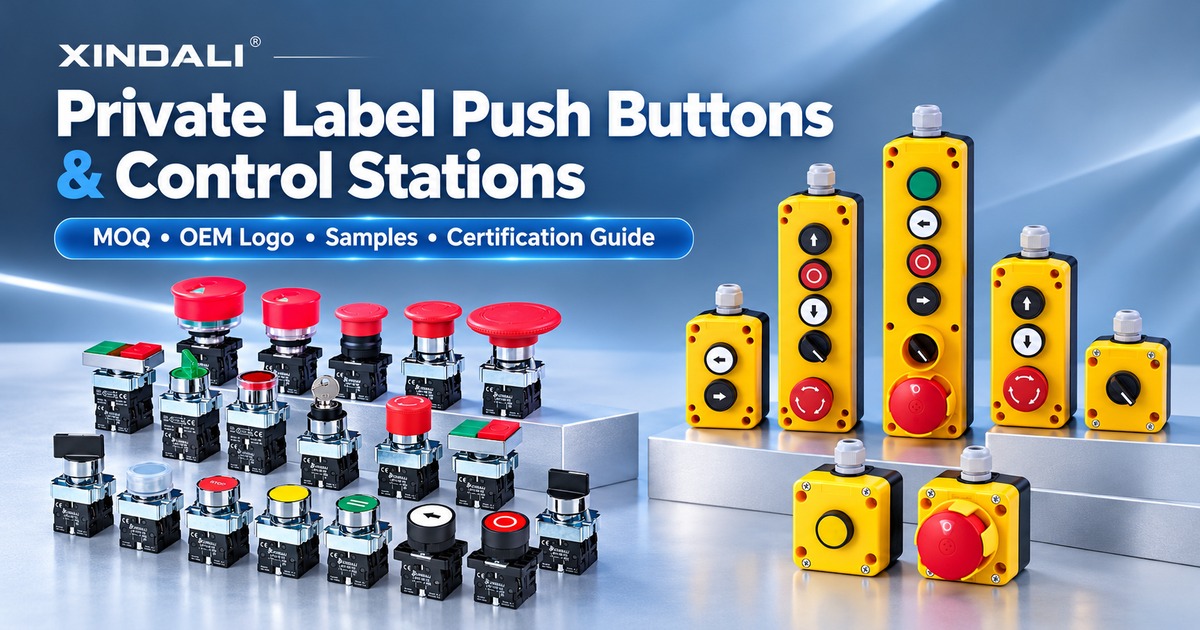
Common OEM requirements include customized button legends, push-button or selector combinations, housing finish, pre-installed cable, connector and harness, mounting accessories and private-label markings. For repair-parts businesses, standardizing a proven assembly can reduce repeated wiring work and the risk of mismatched replacements.
Before a production order, request an agreed technical drawing, the approved wiring schedule, a sample where appropriate and documented confirmation of the final configuration. For an overview of available platforms, browse XINDALI industrial pendant controllers .
People Also Ask: Hydraulic Pendant Controller FAQs
What is a hydraulic pendant controller?
A hydraulic pendant controller is a handheld wired operator station that sends commands such as raise, lower, extend or retract to a machine's control circuit. The pendant does not necessarily switch the motor or pump power directly; its contact ratings and wiring must match the actual control architecture.
Can the same pendant controller work on both 12V and 24V systems?
Not automatically. Check the voltage and current of the circuit being switched, the contact utilization category, and any illuminated or electronic components. A housing that looks identical may contain electrically different parts or use a different pinout.
Is IP65 better than IP54 for outdoor hydraulic equipment?
IP65 provides a higher level of dust and water-jet protection than IP54 under IEC 60529. However, neither rating alone proves suitability for pressure washing, chemicals, immersion, vibration or every vehicle environment. Confirm the exact assembled model and cable-entry rating.
Should UP and DOWN buttons be momentary or maintained?
Momentary, spring-return buttons are commonly selected for motions that must stop when the operator releases the command. Maintained controls are appropriate only when the equipment's operating sequence and risk assessment explicitly call for them.
Does every hydraulic pendant need an emergency-stop button?
No universal button layout fits every machine. Whether an emergency-stop function is required, where it belongs and how it must operate depend on the complete machine risk assessment and applicable standards. A red button alone does not create a validated safety function.
What information is needed to replace an existing hydraulic control pendant?
Provide clear photographs of the old pendant and labels, the control voltage, function list, wiring diagram or verified pinout, contact configuration, cable details, connector type, installation environment and expected quantity. Never replace a unit based only on its appearance.
Can a hydraulic pendant be supplied with a pre-wired cable and connector?
Yes. An OEM supplier can often provide an assembled pendant, cable, strain relief, connector and equipment-side harness. The final conductor assignment and electrical compatibility must be reviewed before manufacture and installation.
When should I choose a handheld pendant instead of a fixed push-button control box?
Choose a handheld pendant when the operator needs to move to a safe viewing position while controlling equipment. A fixed station may be preferable when operation should occur from one defined location. In both cases, consider visibility, cable routing, accidental actuation and operator access.
How do I choose between XDL10, XDL12 and an XDL75 control station?
Start with required functions, safety architecture, environment and installation method. XDL10 offers a flexible wired pendant platform with model-dependent IP ratings; XDL12 provides a compact IP65 pendant platform; XDL75 is a configurable push-button control station. Confirm the exact variant and electrical specification before ordering.
Need a Hydraulic Pendant Controller or Replacement Control Box?
Send XINDALI your application, control voltage, button functions, current pendant photos, wiring diagram or verified pinout, cable requirements and estimated quantity. Our team can review suitable standard options or a custom wired assembly.
Technical References
For engineering reference, consult the official standards publishers: IEC 60529 (IP enclosure protection), IEC 60947-5-1 (electromechanical control-circuit devices), and ISO 13850 (emergency-stop design principles). Product certification and whole-machine conformity must be evaluated separately.